Can You Pressure Wash a Ceramic-Coated Car?
Yes - and a coated car is the one that benefits most from being pressure washed, because more of the dirt leaves without anything touching the paint. The three things that actually shorten a coating are not water pressure.
How this is funded:we earn a commission if you buy through our links, at no extra cost to you. It never changes which product we recommend, and we’ll tell you plainly when we’d skip one. Full disclosure.
The short version
Yes, and you should.A ceramic coating is a cured, cross-linked layer chemically bonded to the clear coat, and it is harder than the clear coat underneath it. Nothing a consumer electric pressure washer produces — with a fan nozzle, at the distance the manufacturer specifies — removes one.
In fact a coated car is the vehicle that gains the most from a pressure wash, for a reason that has nothing to do with force. Because the surface is slick and hydrophobic, a far larger share of the dirt leaves during the touchlessstages — the foam and the rinse — than would on an uncoated car. Less dirt reaching the mitt means fewer opportunities to drag something across the paint, which is the whole point of owning the coating.
Three things do shorten a coating, and none of them is water pressure:
- The nozzle. Specifically the rotor or turbo nozzle, and the zero-degree pencil jet.
- Aggressive chemistry. Strongly alkaline degreasing pre-washes and acidic wheel cleaners, used repeatedly.
- Letting it dry on the panel. Which has nothing to do with the machine and everything to do with working in the sun.
Why the coating is not the vulnerable part
It helps to be clear about what a coating physically is. It is not a wax sitting on the paint, and it is not a film laid over it. It is a liquid that bonds to the clear coat and then cures into a hard, cross-linked layer measured in microns. Removing one typically means machine polishing it off. Water, even pressurized water, is not the right tool for that job and does not do it.
What a pressure washer cando is reveal places where the coating was never properly there. A panel coated over bonded contamination, an area that was applied too thin or under-cured, an edge that was never leveled — those patches can lift. From the driveway that looks exactly like the machine stripping your coating. It found the weak spot. It did not make it.
The genuinely vulnerable things on a car are the ones around the paint: badge adhesive, window and door seals, old vinyl graphics, loose trim clips, and failing clear coat on an older respray. None of those is protected by your coating, and all of them are what the distance rules exist to protect.
The three rules
1. Flat jet, never the rotor nozzle
Kärcher’s published car-washing guidance is unambiguous: “Always wash your car with the flat jet and not with the rotor nozzle”, keep “a minimum distance of 15 centimetres” from the car’s surface and a minimum of 30 centimetres from tyres, and “Always clean from the bottom up, to avoid missing any spots.”
That guidance was written for ordinary paint, which is softer than your coating, so it has margin built in for you already. The 25-degree and 40-degree fan tips are the two that belong on the lance for a car wash. Almost every machine also ships a zero-degree pencil jet or a turbo nozzle, and both are for concrete.
2. Chemistry is the actual threat
This is the rule people miss, because it does not feel dangerous the way a jet of water does.
Strongly alkaline pre-washes.Traffic film removers and heavy degreasing snow foams are formulated to strip bonded grime, and they are effective. They are also effective on a sacrificial layer of coating. Used occasionally on a filthy car, fine. Used every week as your default foam, they measurably shorten the coating’s useful life.
Acidic wheel cleaners.The danger here is overspray. An acid cleaner aimed at a wheel that drifts onto the arch or the lower door is landing on your coating, and on a painted wheel it is worse still — our gloss black wheel guide covers why acid has no place in that part of the wash either.
Soaps with gloss additives. These do not damage the coating, they mask it. A wash-and-wax soap leaves a film that beads on its own, so you lose the ability to tell whether the coating is still working. Our coated-car soap roundup is built entirely around that absence.
3. Nothing dries on the panel
Work in the shade, on a cool car, half the vehicle at a time. Foam that dries on a panel has to be scrubbed off, and scrubbing is where the risk lives. On a coated car this is more important than on an uncoated one, not less: the surface is so slick that residues sit on top in discrete patches rather than spreading thin, and they dry fast.
The same applies to the rinse. Beading water is concentrated mineral content perched on a surface it cannot soak into, which is why a coated car left to air dry in sun often spots harder than an uncoated one. Dry it or blow it dry every time — the drying towels for coated cars page covers that stage properly.
Flow matters more than pressure here too
If you are buying a machine for a coated car, buy on rated flow rather than headline pressure. Flow is what produces thick foam and what rinses a panel in one pass; pressure past a low threshold is risk you are carrying around for no benefit. Pro Tool Reviews has bench-tested the category’s “PSI Max” stickers against certified rated performance and found the two describe quite different machines.
There is a specific coated-car angle to this. Because the surface sheets water so readily, a high-flow rinse genuinely does remove most of the remaining soap and grit on its own. On an uncoated car you are always going to follow up with a contact wash; on a well-coated car that is lightly soiled, a foam and a proper rinse can be most of the job.
What to use on a coated car
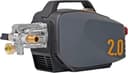
The machine
Active 2.0 Electric Pressure Washer
2.0 GPM of rated flow at a deliberately modest 1800 peak PSI - which is exactly the trade a coated car wants. More water moving means more dirt leaves during the touchless stages, and the low peak pressure means nothing around the paint is at risk at a sensible distance.
$299.99View on AmazonPrice as of October 18, 2026. #ad How we’re funded
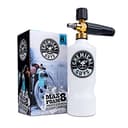
The pre-wash
Chemical Guys TORQ Professional Foam Cannon
The cannon is what converts flow into a clinging layer that dwells on the panel. On a coated car this stage does more work than it does on bare paint, because a slick surface releases its dirt into the foam instead of holding on to it.
$99.97View on AmazonPrice as of October 18, 2026. #ad How we’re funded
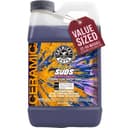
The soap
Chemical Guys HydroSuds Ceramic High-Foaming Car Wash Soap
A high-foaming ceramic soap designed to clean a coated car without the gloss additives that mask whether the coating is still there. It is the one to run in the cannon weekly, with any heavy alkaline pre-wash kept for the rare genuinely filthy day.
$47.99View on AmazonPrice as of October 18, 2026. #ad How we’re funded
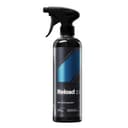
The top-up
CarPro Reload 2.0 Spray Sealant
A silica and siloxane spray sealant intended as a genuine coating topper rather than a gloss enhancer, so the slickness you are restoring is doing protective work. Use it every few washes as a drying aid and the coating underneath lasts closer to its claimed life.
$39.99View on AmazonPrice as of October 18, 2026. #ad How we’re funded
The beading trap
One honest warning to finish on, because it affects how you judge everything above. If you use a ceramic detailer or a spray sealant as a drying aid after every wash, you have given up beading as a diagnostic.
DetailingWiki makes the mechanism explicit for quick detailers generally: a detailer “can improve beading and sheeting for a short period of time, mostly because the layer that interacts with the water is actually the quick detailer and not the protective layer underneath,” so “the surface may show good beading and sheeting even though the layer underneath is worn.”
The fix is simple and costs nothing: two or three times a year, wash with plain pH-neutral shampoo, use no drying aid at all, and look at how the water behaves the next time it rains. That is your coating talking, and nothing else.
Our call
Pressure wash it. Use a 25 or 40-degree fan tip, keep the published minimum distance, work bottom-up and in the shade, and run a pH-neutral coating-safe soap through a cannon rather than a weekly alkaline degreaser. Do that and the machine is extending the coating’s life, not shortening it, because every gram of grit that leaves in the foam is a gram your mitt never dragged across the paint.
And if the car ever genuinely needs a strong traffic-film remover, use one — once. A coating you refresh a little early is a far better outcome than a panel you scrubbed.
Frequently asked questions
Can you pressure wash a ceramic coated car?
Yes, and it is arguably the best way to wash one. A coating is a cured, cross-linked layer bonded to the clear coat, and nothing a consumer electric pressure washer produces at a sensible distance with a fan nozzle lifts it. More than that, a coated car is the vehicle that gains most from a pressure wash, because its slickness means a much larger share of the dirt leaves during the touchless stages - the foam and the rinse - rather than needing a mitt. The things that genuinely shorten a coating are the chemicals you use, not the water.
What pressure washer settings are safe on a ceramic coating?
A fan nozzle - typically the 25-degree green or 40-degree white tip - at the distance the manufacturer specifies. Kärcher's own car-washing guidance is to use the flat jet rather than the rotor nozzle, keep a minimum of 15 centimetres from the surface and 30 centimetres from tyres, and work from the bottom up. That advice was written for paint and it is more than enough for a coating, which is harder than the clear coat beneath it. The nozzles to never use are the zero-degree pencil jet and the turbo or rotor nozzle - both concentrate the machine's whole output onto a point.
Will a pressure washer remove a ceramic coating?
Not at home, no. A cured coating is chemically bonded to the clear coat and is harder than it; removing one normally requires machine polishing. What a pressure washer can do is find existing failures - a coating that was applied over contamination, an area that was under-cured, or an edge that was never properly leveled - and strip those patches, which then reads as 'the pressure washer removed my coating'. It found the weak spot; it did not create it. Commercial hot-water machines at close range are a different matter and are not what most people own.
Does snow foam damage a ceramic coating?
The foam does not; some snow foams do. The products that shorten a coating are the strongly alkaline degreasing pre-washes, sold for lifting heavy traffic film, and acidic wheel cleaners that overspray onto bodywork. Those attack the coating chemistry directly and repeated use measurably shortens its life. A pH-neutral foam, used as intended and rinsed before it dries, does nothing to a coating. Check the bottle for pH-neutral or coating-safe wording and treat the absence of that wording as meaningful.
How close can you hold a pressure washer to a ceramic coated car?
Follow the manufacturer's figure for paint, which already has margin in it - Kärcher publishes a minimum of 15 centimetres from the bodywork and 30 centimetres from tyres with a flat jet. In practice most people work a foot or more away because it is easier to cover a panel that way. Get closer than the stated minimum and the risk is not the coating, it is everything around it: badge adhesive, window seals, failing clear coat on an older repair, old vinyl, and trim clips.
Why has my coated car stopped beading even though I pressure wash it carefully?
Most often because the coating is covered rather than gone. A layer of road film, wax residue or dried detailer sitting on top of a coating stops water behaving the way the coating would. Wash with a pH-neutral shampoo with no gloss additives and look again before concluding anything. There is also a diagnostic trap worth knowing: DetailingWiki notes that a quick detailer can improve beading on its own, because the layer meeting the water is the detailer rather than the coating underneath - so a car that beads beautifully after every aided dry may have a worn coating you cannot see. Check beading after a plain wash with no aids.
Sources
- Kärcher — Car Washing at Home: Tips and Tricks — Pressure-washer manufacturer technique guidance: “Always wash your car with the flat jet and not with the rotor nozzle”; “Keep a minimum distance of 15 centimetres” from the car's surface and “For tyres, it should be a minimum of 30 centimetres”; “Always clean from the bottom up, to avoid missing any spots”; with the right method and that minimum distance the tyres will not be damaged (accessed October 5, 2026)
- DetailingWiki — What is a quick detailer — Detailing reference wiki (Vinnie van Rooij): a QD works "by leaving a very small layer of wax and or polymers on top of the existing layer"; it is normally "sprayed on a micro fibre towel and then smeared across the surface," and spraying straight onto the panel "is rarely recommended" because product can dry in places a towel cannot reach; the documented downside is that a QD "can improve beading and sheeting for a short period of time, mostly because the layer that interacts with the water is actually the quick detailer and not the protective layer underneath," so "the surface may show good beading and sheeting even though the layer underneath is worn"; 'boosting' a wax "would imply that it revives the layer of wax underneath, which is not the case"; concentrates meant for dilution should be diluted with demineralized water to avoid water spotting (accessed October 11, 2026)
- Pro Tool Reviews — Pressure Washer PSI That's Too Good to Be True? It Probably Is! — Independent bench measurements of "PSI Max"/"GPM Max" claims vs PWMA-certified rated performance (accessed July 19, 2026)
- Chemical Guys — Two Bucket Method Car Wash Guide — Manufacturer how-to on the two-bucket wash and grit guards (accessed July 19, 2026)
Keep reading
Best Car Wash Soap for Ceramic-Coated Cars
The chemistry half of this question - a coating does not need a special soap, it needs the absence of gloss additives and alkaline degreasers.
See the soapsBest Drying Towels for Ceramic-Coated Cars
The drying half - why a coated car spots harder than an uncoated one if you leave it, and the towels and aids that suit a slick surface.
See the picksHow to Maintain a Ceramic Coating
The full routine that gets a coating to the end of its claimed life rather than half of it.
Read the routineWhat PSI to Pressure Wash a Car
The pressure and nozzle combination that is safe on paint, and the tips in every box that are not.
Check the numbers